
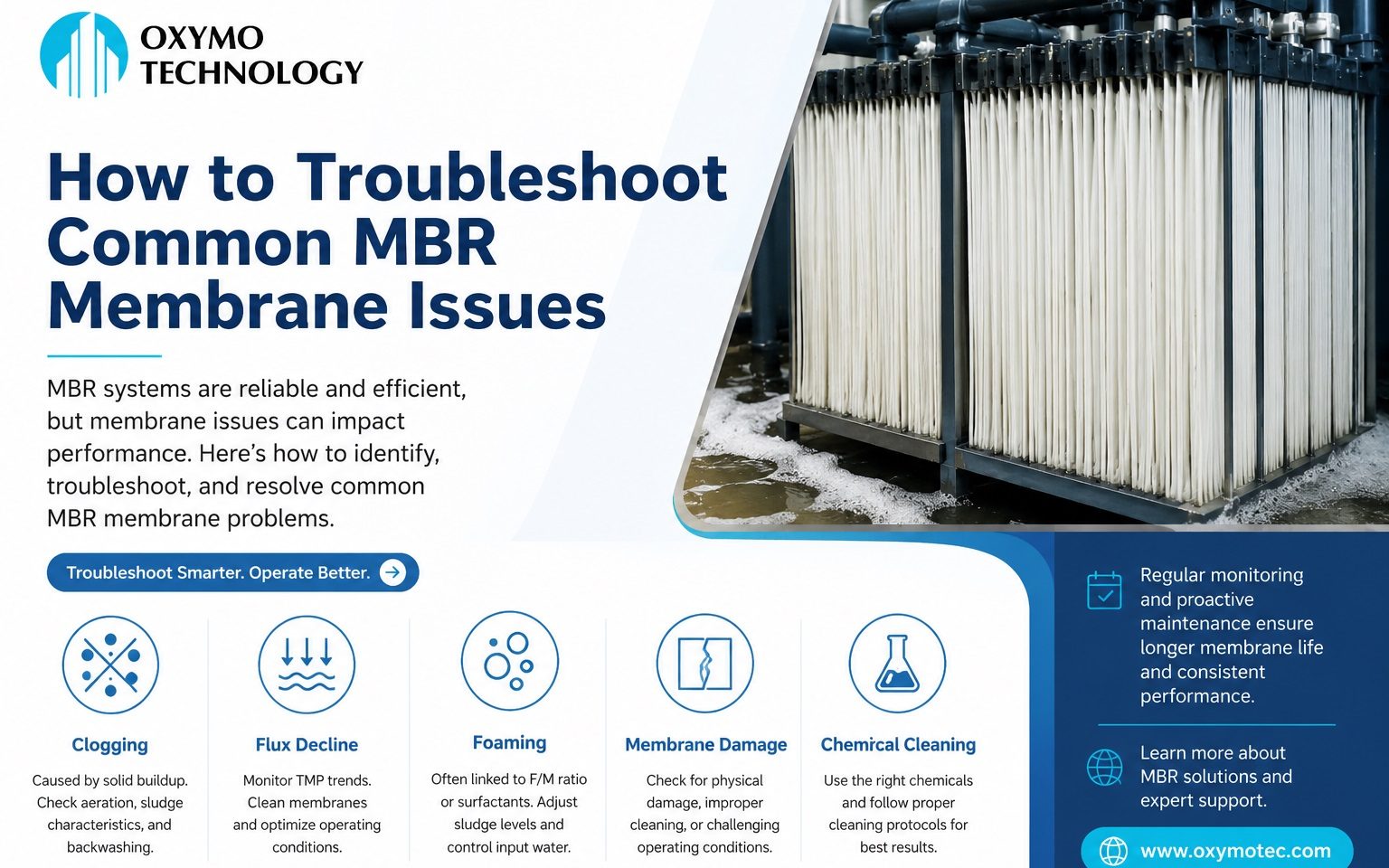
How to Troubleshoot Common MBR Membrane Issues
If you are a wastewater treatment plant operator, you know the importance of your MBR membrane to everyday operations. If it works, all things work. When things go wrong, however, the effects are quick — flux decreases, pressure builds up, or the quality of the permeate is affected. The good news? The problem of the MBR membrane is a common one. Troubleshooting is less stressful once you are familiar with the things you need to look for. The most common problems, their causes, and how exactly to solve them are discussed in this guide.
What Is an MBR Membrane and Why Does It Matter?
A membrane bioreactor (MBR) is a process that is a combination of biological wastewater treatment and membrane filtration. The MBR membrane acts as the filtration barrier — separating treated water from solids, bacteria, and other contaminants. It’s the heart of the entire system. If the membrane fails to perform well, then the entire treatment process suffers as a result. This is why early detection and correct troubleshooting are always a necessity for any serious operation.
5 Common MBR Membrane Issues and How to Fix Them
1. MBR Membrane Fouling
What it is: Fouling is the accumulation of particles, biofilm, or organic matter on or within the membrane surface. It’s the most common issue in MBR wastewater treatment systems.
Signs to watch for:
- Slow increase of the transmembrane pressure (TMP)
- Reduced flow rate of permeate.
- Reduced membrane flux
What causes it:
- The high levels of MLSS concentration.
- Inadequate aeration
- A sludge with low filterability
- Overloading the system
How to fix it:
- Rise aeration intensity for better scouring over the surface of the membrane.
- Monitor and adjust MLSS (range from most systems: 8000–12000 mg/L).
- Apply a relaxation cycle – periodically interrupt filtration to enable foulants to remove.
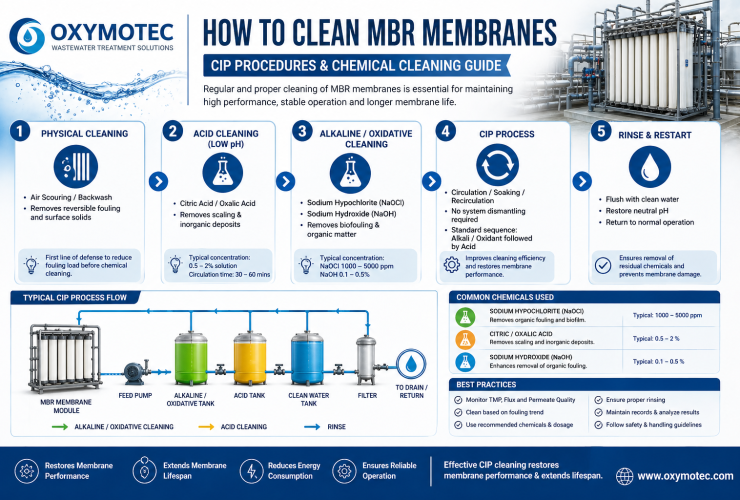
- For heavy fouling, do a maintenance clean with sodium hypochlorite or citric acid.
2. Sudden Spike in Transmembrane Pressure (TMP)
What it does: It is the pressure difference across the membrane. If the temperature of the TMP has suddenly increased, this is most likely a rapid fouling event or a physical blockage.
Signs to watch for:
- TMP increases rapidly over hours (not days)
- No change in feed water quality
- Normal or lower flow rate.
What causes it:
- The deposition of calcium or magnesium scales.
- Biological fouling in the form of filamentous bacteria.
- Air scouring failure
How to fix it:
- Immediately inspect the aeration system — a frequent problem is the clogged diffusers.
- Inspect sludge characteristics. Fouling can become severe when there is filamentous bulking.
- Chemical clean-in-place (CIP) with citric acid for scaling.
- Check feed water chemistry; if high hardness, consider dosing with antiscalant.
3. Membrane Flux Decline
What it means: Flux decline is reduced water flux through the MBR membrane per unit time. It has a major impact on plant capacity if it is not addressed.
Signs to watch for:
- Reduce permeate volume while maintaining the same or higher TMP.
- Slower filtration cycles
What causes it:
- Formation of fouling layer that cannot be removed
- Aging of hollow fiber membranes
- Inadequate backwashing
How to fix it:
- Review your backwash frequency and duration — increase if needed.
- Use a higher concentration of sodium hypochlorite (500-1,000 ppm) to do a recovery clean.
- Check for broken fibers in hollow fiber membranes, which decrease the effective membrane surface area for filtration.
- If the flux does not improve following several cleanings, it may be necessary to replace the membrane.
4. Poor Permeate Quality
What it is not: The treated water (permeate) does not meet quality criteria (high turbidity, high BOD or microbial contamination).
Signs to watch for:
- Permeate that is turbid or cloudy.
- Poor effluent quality results
- The presence of suspended solids in treated water
What causes it:
- Broken or damaged hollow fiber membranes
- Integrity breach in seals or headers
- Overflow of untreated water
How to fix it:
- Perform a membrane integrity test (pressure decay or bubble point).
- Remove and separate damaged fibers – seal damaged fibers with potting compounds.
- Check all O-rings, seals, and header connections for cracks or leaks.
- Review system hydraulics — check for short-circuiting in the bioreactor tank.
5. Biological Process Imbalance
What it is: The biological treatment stage isn’t performing well, which indirectly stresses the MBR membrane.
Signs to watch for:
- Effluent BOD increases or effluent ammonia increases
- The foaming that occurs in the bioreactor.
- Unusual sludge color or odor
What causes it:
- Nitrogen or phosphorus deficiency (nutrient imbalance)
- The material discharged by industries, which contains toxic substances.
- Low oxygen levels in the water, (dissolved oxygen – DO)
How to fix it:
- Monitor DO levels and keep greater than 2 mg/L in the aeration zone.
- Monitor and correct mixed liquor nutrient ratios.
- Look for any unusual industrial effluents upstream.
- Control sludge retention time (SRT) accurately – too short results in washout and too long causes viscosity.
MBR Membrane Maintenance Best Practices
The key to solving most problems in an MBR system is its good maintenance. Do this consistently:
| Maintenance Activity | Frequency |
| Relaxation cycles | Every 8–12 minutes of filtration |
| Maintenance cleaning (hypochlorite) | Weekly |
| Recovery cleaning (CIP) | Monthly or when TMP exceeds threshold |
| Aeration system inspection | Weekly |
| Membrane integrity testing | Quarterly |
| Full membrane inspection | Annually |
Maintaining a log of TMP trends, flux rates, and, as a result, cleaning events allows you to identify patterns early before minor issues become major issues.
Conclusion
You don’t need to guess when troubleshooting MBR membrane problems. Whether it is fouling, TMP spikes, flux decline, or failure of permeate quality, most problems are solvable and have identifiable causes. The key is to monitor consistently, act early, and follow a structured maintenance routine. When you understand how your MBR membrane behaves under different conditions, you can catch warning signs before they escalate into costly downtime. However, even the best troubleshooting can be limited by the quality of the membrane itself. The performance of your system over time can make a significant difference by using a high-quality MBR membrane supplied by a quality supplier. OXYMO Technology offers cutting-edge MBR membrane technologies with a long lifespan, high flux performance stability, and fouling resistance. From troubleshooting to new installations, OXYMO’s technical team will help you select the right membrane to meet your wastewater treatment requirements.
Get in touch with OXYMO Technology today to discuss your MBR system challenges and explore solutions built to perform.
FAQs
What is the most common cause of MBR membrane fouling?
It is usually attributed to high MLSS levels and inadequate aeration. If the scouring air flow decreases, particles immediately deposit on the surface of the membrane and create a fouling layer quickly.
How do I know when to replace an MBR membrane?
When multiple chemical cleanings fail to restore flux and/or TMP continues to be elevated, this is a good indication that the membrane is at the end of its useful life and should be replaced.
How often should MBR membranes be chemically cleaned?
Maintenance cleaning should be performed once a week, and intensive recovery cleaning (CIP) is usually performed every month or as TMP levels approach your system’s defined threshold.
Can a broken hollow fiber membrane affect effluent quality?
Yes. Just a few broken fibers can result in the presence of solids and microorganisms in the permeate and result in non-compliant effluent quality standards.