
10 Benefits of Using MBR Membranes in Water Treatment
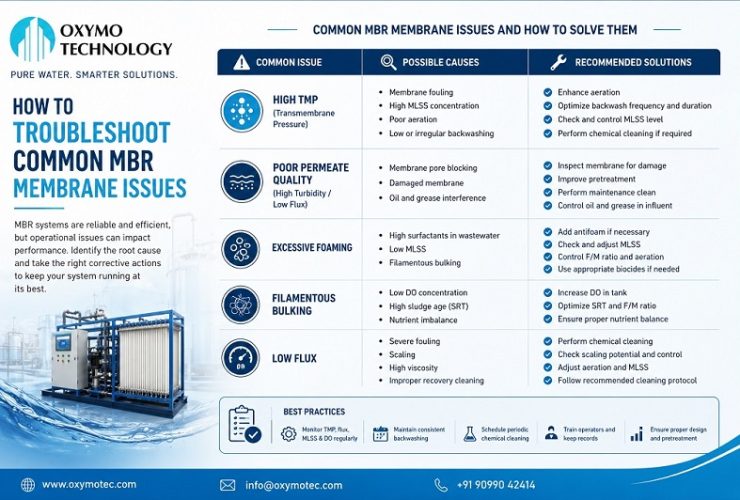
Water is one of the most important resources in any industry. However, many companies struggle to do this effectively, economically, and at scale. This is where MBR membrane technology comes in. MBR, or Membrane Bioreactor, is changing the way industries handle water treatment. If you have a manufacturing plant, food processing unit, or even a municipal facility, then MBR systems are a smarter and more reliable alternative to conventional treatment methods. In this blog, we break down the top 10 benefits of MBR membranes and why more B2B companies are making the switch.
What Is an MBR Membrane?
A membrane bioreactor membrane (MBR membrane) is the combination of biological wastewater treatment and membrane filtration in one process. Rather than settling tanks, the MBR filter uses high-precision membranes to filter water at a much finer level. The result? Better quality output water, reduced size of infrastructure, and much improved performance compared to older systems. Now, let’s look at why businesses across industries are choosing MBR water treatment over conventional options.
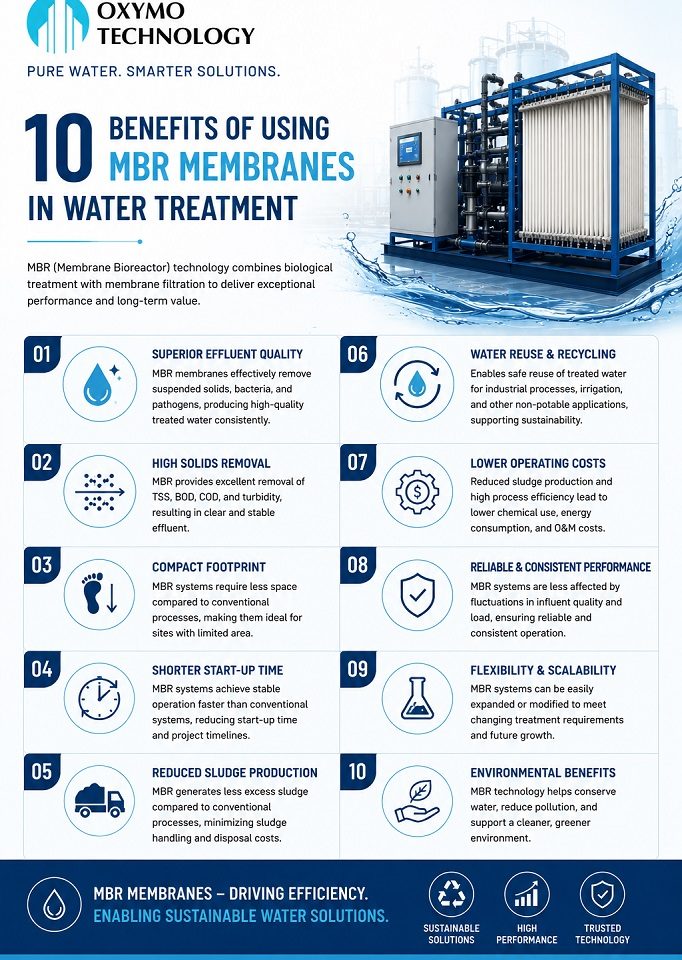
10 Key Benefits of MBR Membrane in Water Treatment
1. Delivers Superior Effluent Quality
The MBR membranes provide treated water with a quality much higher than the conventional biological treatment system. The membrane provides a precise physical barrier that clears the water of suspended solid particles, bacteria, and most pathogens.
This excellent effluent quality complies with strict environmental discharge standards and is more often than not appropriate for direct reuse, which most conventional systems simply cannot match.
2. Requires a Much Smaller Footprint
The compact design is one of the major features of MBR technology. In contrast to conventional treatment facilities, MBR systems do not require a large secondary clarifier, which reduces space requirements of 30 to 50 percent.
This space efficiency is a lifesaver for businesses that have limited space or are located in urban areas.
3. Produces Less Sludge
In comparison with conventional activated sludge systems, MBR water treatment systems produce substantially less biological sludge. By reducing sludge, you can save on disposal fees, handling needs, and the environmental impact for your facility.
In the long run, this has a direct effect on your profits.
4. Highly Effective Pathogen Removal
The physical membrane barrier in an MBR system filters out almost all pathogens. This makes MBR filtration a perfect solution for industries in which water quality directly affects product safety or public health, such as food processing, pharmaceuticals, and hospitals.
This degree of biological safety cannot be achieved in any settling tank.
5. Simple to Automate and Operate
Modern MBR systems are designed to operate with minimum maintenance and automation. Compared to conventional systems that require constant manual monitoring, MBR technology allows for remote control and smart monitoring integration.
This helps minimize the cost of labor and the risk of human error, making it appealing for facilities wishing to streamline operations.
6. Scalable for Growing Operations
MBR membrane systems can be easily scaled to plant size, whether it is a mid-sized plant or a large industrial facility. Modular design provides flexibility for expanding the system as business grows without having to overhaul the entire infrastructure.
7. Helps Meet Regulatory Compliance
Water discharge restrictions are becoming more stringent each year. MBR water treatment systems always generate effluent that complies with or exceeds environmental regulations.
By choosing MBR technology, you ensure that your business remains compliant with regulations and that you don’t end up facing a fine or an operational shutdown.
8. Reduces Chemical Consumption
Since the MBR membranes use physical filtration, they require much fewer treatment chemicals than those used in heavy chemical dosing. This decreases operating costs and environmental impact and chemical waste at the facility.
9. Longer Operational Lifespan and Better ROI
Good quality MBR membranes are designed to be long-lasting. When properly maintained, they offer a longer operational lifespan than many conventional filtration components. When sludge handling fees, chemicals, and space costs are added to the savings, the overall ROI of MBR systems can be better in the long run.
10. Enables Effective Water Reuse
One of the most strategic advantages of MBR is the effluent quality, which is good enough for reusing in industrial processes. Water recycling helps decrease freshwater consumption, helps save on utility bills, and helps meet sustainability objectives. This is not only beneficial but also essential for industries that work in water-stressed areas.
MBR Membrane vs. Conventional Treatment: Quick Comparison
| Feature | MBR Membrane System | Conventional System |
|---|---|---|
| Effluent Quality | Very High | Moderate |
| Space Requirement | Small / Compact | Large |
| Sludge Output | Low | High |
| Pathogen Removal | Excellent | Moderate |
| Automation | Easy | Complex |
| Water Reuse Potential | High | Low |
| Regulatory Compliance | Consistent | Variable |
Conclusion
The importance of water treatment is not merely to uphold minimum standards. In today’s world, businesses require systems that are efficient, cost-effective, scalable, and future-proof. MBR membrane technology meets all these requirements. The benefits are not only measurable; they are superior effluent quality, reduced sludge, compact design, and water reuse potential. With increasing water scarcity and tightened environmental regulations, water treatment systems based on MBR are not only economically and operationally viable, but they also make a sound investment. Upgrade your wastewater treatment with OXYMO Technology’s advanced MBR systems for efficient, reliable, and long-lasting performance.
FAQs
What is an MBR membrane used for?
In wastewater treatment process, biological treatment and membrane filtration are combined by using an MBR (membrane bioreactor) membrane. It generates high quality effluents which are good for discharge or reuse in industry.
How long do MBR membranes last?
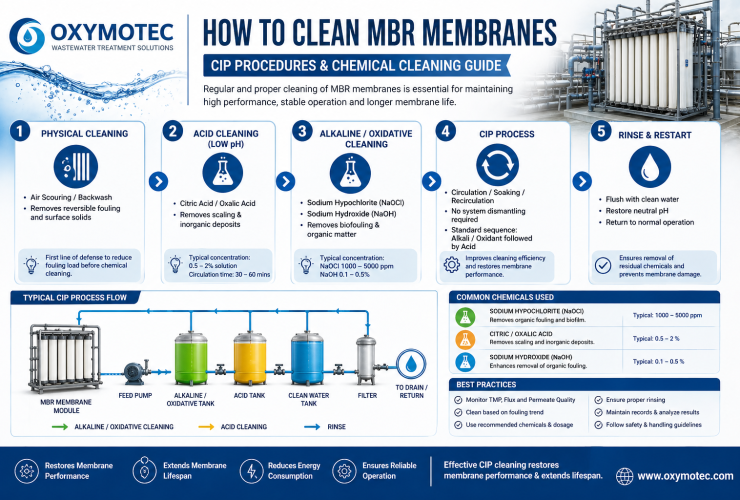
The lifetime of MBR membranes is normally 5–10 years, depending on the treatment. They can be cleaned and monitored regularly to increase their life and keep them efficient.
Is MBR water treatment cost-effective?
Yes. While the upfront investment is greater, the reduced sludge disposal, chemical usage, and equipment requirements result in significant ROI benefits over time with MBR systems.
Can MBR systems handle industrial-scale water treatment?
Absolutely. MBR systems are completely scalable and have been extensively used in large-scale water treatment plants worldwide, including industrial and municipal facilities.