

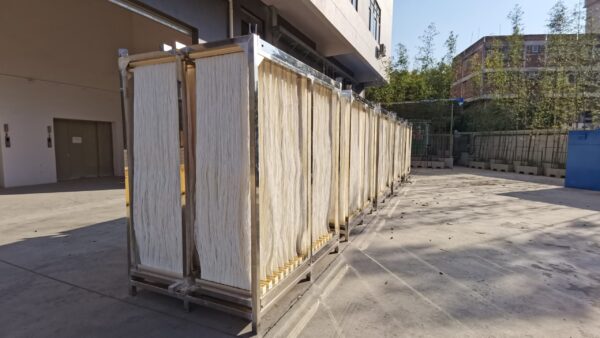
How the MBR System Works
Membrane Bioreactor (MBR) technology is an integrated biological treatment and membrane filtration process in a single compact system. The Oxymo Technology MBR system produces high-quality effluent within a single unit, compared to a conventional sewage treatment plant that requires secondary clarifiers and further disinfection steps.
Step 1 — Screening & Pre-Treatment
Raw sewage enters the system and passes through a fine screen that filters out large objects, rags, and debris. This prevents damage to the downstream membranes and lowers the organic loading to the bioreactor.
Step 2 — Bioreactor (Biological Treatment)
Screened wastewater passes to the aeration tank, where oxygen is provided to activated sludge microorganisms which break down dissolved organic matter such as BOD, COD, ammonia, and nutrients. The MBR system maintains a significantly higher Mixed Liquor Suspended Solids (MLSS) concentration than conventional systems, giving more efficient treatment in a smaller tank volume.
Step 3 — Membrane Filtration
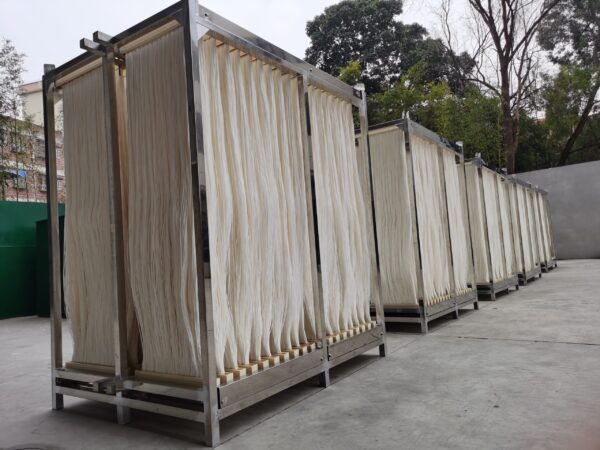
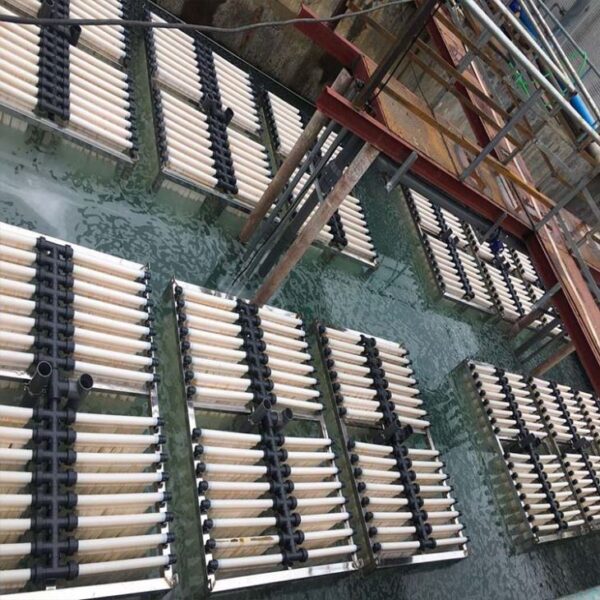
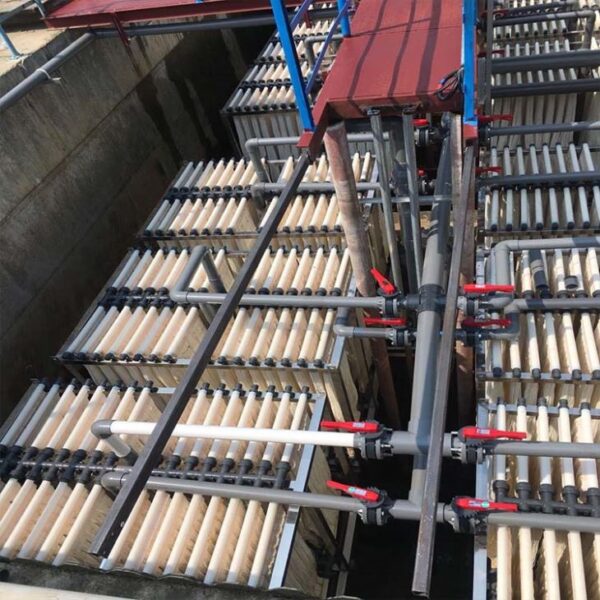
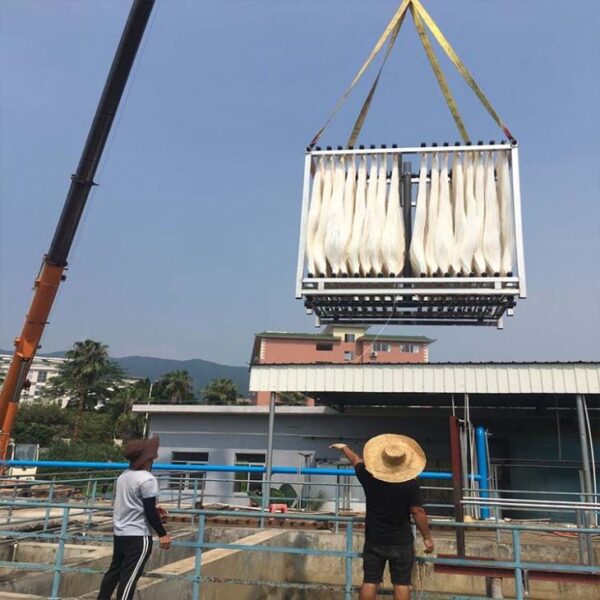
The treated wastewater then flows through Oxymo’s PVDF hollow-fiber or flat-sheet MBR membranes. The pore size ranges from 0.01 to 0.1 micron, which filters the removal of suspended solids, bacteria, and many pathogens. This results in treated water that is clear and of good quality, and consistently has good effluent quality.
Step 4 — Permeate Discharge or Reuse
The filtered permeate exits the system with BOD < 10 mg/L, TSS < 5 mg/L, and turbidity < 1 NTU. The treated water may be reused for irrigation, flushing toilets, industrial cooling systems, and other approved water reuse purposes. The MBR STP plant is fully automated and can operate with minimal supervision, making it suitable for sites without full-time operators.
Key Benefits
Oxymo Technology MBR membranes produce high-quality treated water that meets or exceeds CPCB Class A and NGT discharge standards. An ultrafiltration barrier eliminates secondary clarifiers and lessens dependence on chemical disinfection. Effluent is suitable for water reuse — landscaping, toilet flushing, and industrial processes.
- Single compact unit: Biological treatment and filtration are integrated, which is ideal for housing societies, hotels, hospitals, and urban commercial complexes with high land cost. The package system can often be containerized or installed below ground.
- Durable reinforced PVDF membranes: Oxymo’s embedded-reinforced PVDF membranes withstand elongation of up to 300% without fiber breakage under standard operating conditions. Membrane life is 5–8 years, which decreases the frequency of replacement and lifecycle cost.
- Low sludge generation: Higher biological activity results in lower excess sludge than conventional activated sludge, reducing disposal costs and sludge infrastructure.
- Automated operation: The package MBR system operates continuously or intermittently with very few operator interventions; controls manage aeration and membrane backwashing, and trigger alarms automatically, which is valuable for decentralized STPs where skilled operators are not available on site 24 hours a day.
- Modular scalability: Sizes range from 1 KLD up to 500+ KLD, with the addition of more membrane modules or treatment units without significant civil construction.
MBR vs. Conventional STP
The selection of the appropriate sewage treatment plant (STP) depends on effluent quality, space, operating costs, and water reuse. Below is a quick comparison of a Conventional STP and an Oxymo Technology MBR plant:
| Parameter | Conventional STP | Oxymo Technology MBR Plant |
| Solid–liquid separation | Secondary clarifier (gravity) | Membrane barrier (0.01–0.1 µm) |
| Effluent BOD | 20–30 mg/L typical | < 10 mg/L |
| Effluent TSS | 30+ mg/L | < 5 mg/L |
| Turbidity | Variable | < 1 NTU |
| Footprint | Large | 30–50% smaller |
| Secondary clarifier | Required | Not required |
| Disinfection chemicals | Higher | Reduced |
| Sludge production | Higher | Lower |
| Reuse readiness | Needs tertiary polishing | Reuse-ready |
| Automation | Limited | Fully automated (PLC) |
The Takeaway:
An MBR STP plant produces higher quality treated effluent, requires less footprint, and can be used for water re-use applications. It is compact and automated, and is well suited to modern residential, commercial, municipal, and industrial wastewater treatment projects.
Applications
Oxymo Technology MBR systems are deployed across a wide range of sectors in India and internationally, wherever a reliable, compact sewage treatment plant is required:
- Residential complexes, apartments & housing societies
- Hotels, resorts & hospitality
- Hospitals & healthcare facilities
- Commercial complexes, malls & office parks
- Schools, colleges & institutional campuses
- Municipal sewage treatment for towns & urban local bodies
- Industrial townships & remote / containerized installations
For housing societies, NGT rules and local laws in many states in India mandate the installation and operation of an on-site STP in housing complexes exceeding a specific size. Oxymo’s package MBR system is compact enough to fit into spaces a conventional plant can’t, while still meeting CPCB Class A effluent standards.
Why Choose Oxymo TechnologyTechnology?
There are dozens of MBR system suppliers. Here are some of the benefits that differentiate Oxymo Technology as an MBR sewage treatment plant manufacturer & supplier:
15+ Years of Membrane Expertise
Oxymo TechnologyTechnology has specialized exclusively in ultrafiltration membrane research, development, and manufacturing for over 15 years. As a dedicated manufacturing company, we make our membranes in our own factory in Foshan, Guangdong, which allows us to have direct control over raw materials, manufacturing quality, and product consistency.
CE Certified Membranes | ISO 9001 & ISO 14001
Every Oxymo Technology membrane is CE certified. Our manufacturing and operations are audited and maintained to ISO 9001 (quality management) and ISO 14001 (environmental management) — audits our facility undergoes on an ongoing basis. This is the type of quality control that is needed for municipal and institutional buyers.
Patent-Backed Membrane Technology
Oxymo Technology holds invention patents in several high-performance membrane products — MABR, flat-sheet MBR, UF, and membrane distillation — developed with universities and research institutions. This is custom-engineered technology, not a mass-produced product.
Hundreds of Projects in 40+ Countries
As an experienced exporter and global supplier, Oxymo Technology has designed, supplied, and commissioned hundreds of STP, WWTP (wastewater treatment plant), and WTP (water treatment plant) projects in more than 40 countries. These projects include municipal STPs, industrial ETPs, resort wastewater systems, and containerized wastewater treatment plants for remote locations across South Asia, Southeast Asia, Australia, Africa, and the Pacific. All projects are supported by Oxymo’s global distribution and service network.
Full Project Lifecycle Support
Oxymo Technology offers end-to-end support: process design & engineering, equipment supply, installation supervision, commissioning, operator training, and after-sales service. You are not purchasing from a catalog; you are hiring a team to do the project from conception to implementation.
CPCB / NGT Compliance Expertise
Our systems are designed to comply with the Class A effluent norm of CPCB and the discharge guidelines of NGT for customers in India. We understand regulatory requirements for housing society STPs, industrial ETPs, and municipal projects, and can assist in documentation for regulatory submissions.
OEM, Wholesale & Bulk Supply
Oxymo Technology is a direct MBR sewage treatment plant manufacturer & supplier offering OEM and ODM solutions for MBR membranes and complete sewage treatment systems. We provide customized plant capacity, system configuration, and private labeling to fit various project needs and markets.
Oxymo Technology is a factory and wholesaler offering competitive prices on multiple packages and wholesale orders across the country, ranging from individual-package plants to large multi-site projects. Prices depend on order quantity and individual requirements.
For distributors, contractors, and water-treatment companies, our OEM partnership provides access to a proven MBR platform with in-house design and manufacturing. From custom solutions to continuous bulk order supply, Oxymo Technology provides flexible production and reliable factory-direct service to meet your needs.
Global Supply, Distribution & Partner Program
As a global supplier of MBR technology, Oxymo Technology supports every plant with a project network spanning 40+ countries. Our global distribution and logistics team handles export documentation, shipping, and delivery. As an experienced exporter, we ensure that MBR STP plants ordered from our China factory reach the destination ready for installation. Oxymo Technology has a strong global distribution network that makes it a trusted long-term global supplier for engineering companies.
For distributors, system integrators, and EPC contractors, partnering with a specialist manufacturing company like Oxymo Technologyoffers several benefits. These include a certified and patented membrane platform, direct factory price with reasonable profit mark-up, and customized engineering support for various projects. Distributors can provide customers with reliable sewage treatment MBR plants in their markets without setting up their own membrane plant. Wholesalers can also benefit from repeat orders for membrane modules, spare parts, and replacement membranes.
Oxymo Technology is a vertically integrated manufacturing firm that enables partners to engage with the team that designs and produces the membranes — no trading intermediary involved. This ensures quicker technical support, quality control, and reliable supply for recurring bulk and large-volume orders.
Get a Quote
Looking for a compact and compliant MBR Sewage Treatment Plant Manufacturer & Supplier? Oxymo Technology is a certified China-based factory and experienced exporter offering factory-price sourcing, customized OEM MBR plants, and bulk order supply for systems from 1KLD to 500+ KLD. Provide flow rate, wastewater characteristics, and water reuse needs. Depending on your bulk requirement, our engineers will suggest the most appropriate MBR model and offer competitive wholesale prices.
FAQs
A sewage treatment plant (STP) treats residential, municipal, and industrial wastewater to remove pollutants and contaminants. It uses physical, biological, and chemical treatment methods to create treated water that meets specific standards and can be used in approved reuse, including irrigation, toilet flushing, cleaning, or safe discharge, as appropriate in local water use regulations.
MBR systems typically have a higher upfront cost than conventional activated-sludge systems of equal capacity, but recover it through lower land cost (30–50% smaller footprint), lower chemical use, lower sludge disposal, and effluent reuse. Typically, the total lifecycle cost is lower over a 10–15 year time frame. Please contact us for a site-specific comparison and factory price.
Oxymo Technology MBR systems are designed for low-maintenance and automated operation. Routine maintenance involves periodic membrane cleaning, system inspection, and replacement of consumables. Chemical cleaning is typically performed every 3-6 months, depending on the quality of the wastewater. Maintenance contracts and operator training are also available.


There are no reviews yet.