
MBR Membrane Fouling – Causes, Prevention & How to Extend Lifespan
In wastewater treatment efficiency is not just an operational or technical aspect; it is a daily challenge to meet your plant’s demands. When your MBR membrane starts underperforming, it’s not just a maintenance issue; it impacts costs, compliance, and peace of mind.
One of the main problems that arise at wastewater purification plants is membrane fouling in the MBR system. If properly managed and addressed correctly, it’s controllable and even preventable. If properly managed and addressed correctly, it’s controllable and even preventable.
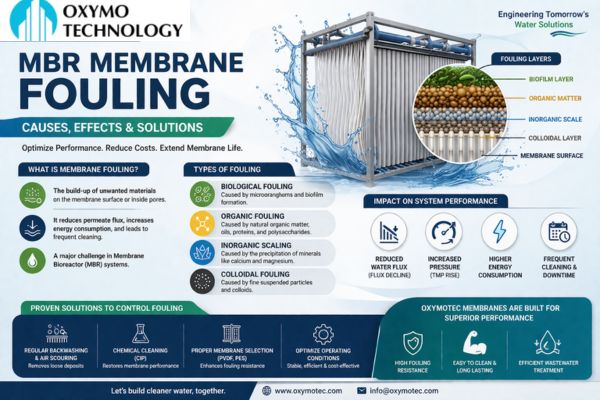
What is MBR Membrane Fouling?
MBR (Membrane Bioreactor) systems rely on membranes to separate clean water from contaminants. With time the membrane surface or the pores are filled with undesirable materials. This accumulation is referred to as membrane fouling.
This will result in:
Reduced filtration efficiency
Increased energy consumption
Frequent cleaning cycles
Shorter membrane lifespan
The operators see their work as an impossible task because they think they will lose every time but they can change the situation.
What Are the Main Causes of MBR Membrane Fouling?
Control of a system begins with understanding its underlying reasons. Fouling typically falls into four categories:
1. Biological Fouling (Biofouling)
Microorganisms form a sticky layer known as biofilm on the MBR membrane surface. The current solution presents a substantial obstacle that requires time to be removed.
2. Organic Fouling
The membrane becomes blocked when organic compounds like oils and grease, together with proteins, bind to its surface and create a blockage in its pores.
3. Inorganic Fouling (Scaling)
Minerals such as calcium and magnesium form hard deposits. This type of fouling is especially common in hard water areas.
4. Particulate Fouling
Fine particles and suspended solids are deposited with time, forming a thick layer that limits water flow.
It might take a little different approach to each type- but in most systems it is a mixture of all four.
How to Prevent MBR Membrane Fouling
It is always more economical to prevent than to correct. Here is what actually works in practice:
Maintain Proper Aeration
Proper airflow is beneficial in creating turbulence that inhibits the settlement of solids on the membrane surface. Poor aeration is a silent contributor to fouling.
Optimize Sludge Management
The correct sludge concentration needs to be maintained at MLSS levels because it helps to decrease excessive sludge accumulation. The system experiences faster sludge accumulation when there is an excessive amount of sludge.
Use Pre-Treatment Systems
Preliminary screening together with grit removal operations enables wastewater treatment facilities to decrease the amount of solid particles that will reach their MBR membrane.
Monitor Flux and Pressure
Frequent monitoring of transmembrane pressure (TMP) can identify the initial symptoms of fouling before it becomes a critical problem.
Scheduled Cleaning Protocols
Rather than reactive cleaning, preventive maintenance:
- Physical cleaning (backwashing, air scouring)
- Chemical cleaning (when required)
A consistent routine can dramatically extend membrane life.
How to Extend the Lifespan of an MBR Membrane
Let’s be honest – membranes are expensive. The process of membrane replacement brings both high expenses and operational difficulties. The process of extending their lifespan requires both technical expertise and strategic planning.
Avoid Overloading the System
An overloaded system will deteriorate faster, and foul amounts of contaminants will become significant. The solution provides immediate relief but results in decreased system functionality over time.
Choose the Right Cleaning Chemicals
Harsh or incorrect chemicals can damage membrane integrity. The type of cleaning agent needs to match the specific fouling conditions that exist.
Train Your Operators
The system becomes nonfunctional because of untrained personnel. Operators with advanced skills can detect preliminary indicators of problems while they still have time to solve them.
Invest in Quality Membranes
Different manufacturers produce membranes with varying durability. A high-quality MBR membrane will be initially expensive but will help you save maintenance and replacement costs.
Why It Matters More Than You Think
The operation of each MBR system depends on a dedicated team, which ensures both compliance with regulations and operational efficiency and cost-effective performance. The technical problem of fouling exists as an operational challenge that creates stress for the system.
The system experiences 3 negative effects when membrane failure occurs:
- Downtime increases
- Operational costs rise
- Regulatory risks grow
An MBR membrane provides dependable performance when operators maintain all aspects of its management.
Final Thoughts
While membrane fouling is unavoidable, poorly managed membrane fouling is not.
With a good combination of prevention, monitoring, and maintenance, you can protect your system, minimize operating expenses, and extend membrane life.
If you’re looking to improve performance or reduce frequent cleaning cycles, it is the right time to take action. Connect with Oxymotec, enhance your MBR membrane performance, and eliminate the need for regular cleaning.
FAQs
How often should MBR membranes be cleaned?
Frequency of cleaning is based on the load of the system, although the routine preventive cleaning is usually every week or month, with deep cleaning done as necessary.
How long will an MBR membrane last?
With proper maintenance, a properly maintained MBR membrane has a lifespan of between 5-10 years depending on the conditions of operation and maintenance practices.
What is transmembrane pressure (TMP)?
TMP is the negative pressure gradient between the two sides of the MBR membrane, which is used to measure performance and early fouling.
Are foul membranes of MBR restorable?
Yes, a lot of contaminated membranes can be partially reused with physical or chemical cleaning, according to the type of foulness.
Why is aeration important in MBR systems?
Aeration is used to ensure that solids do not accumulate on the MBR membrane to decrease fouling and ensure the efficiency is maintained.