
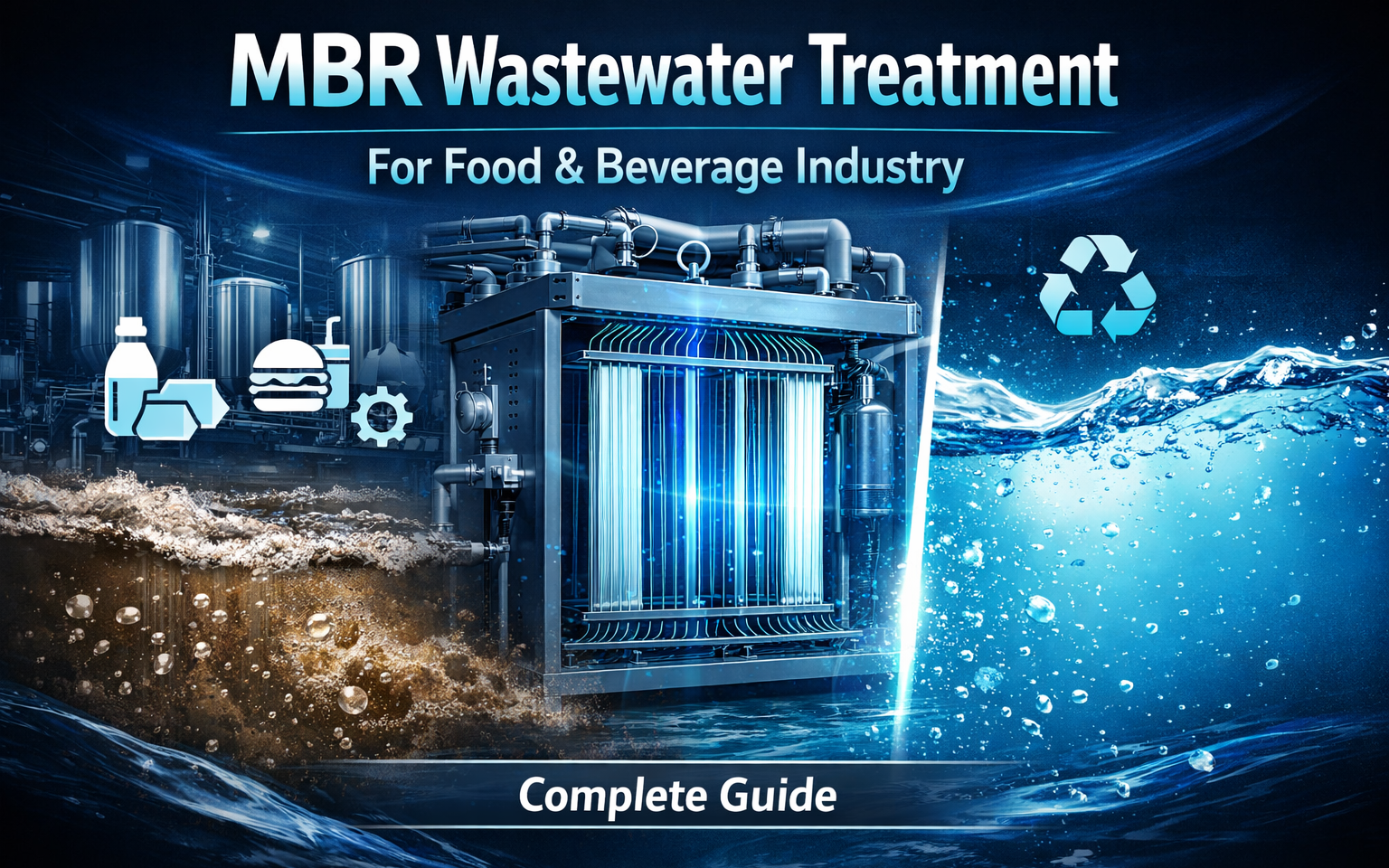
MBR Wastewater Treatment for Food and Beverage Industry: Complete Guide
Water is not a resource in the food and beverage industry; it is a part of the product, the process, and the brand promise. The responsibility of running wastewater operations needs effective management because businesses must treat water as their main responsibility. MBR Wastewater Treatment functions as a revolutionary solution for wastewater treatment needs. We will explain the process in a way that works for your business operations through understandable and practical information.
What is MBR Wastewater Treatment?
MBR Wastewater Treatment (Membrane Bioreactor) is a highly advanced wastewater management method that integrates biological treatment processes with membrane filtration technologies. The system eliminates the need for traditional settling tanks because it utilizes ultra-fine membranes to produce clean water through the removal of contaminants. The system produces treated water through an efficient process that requires less operational space. For businesses in the food and beverage sector, this technology is more than just innovation; it is a smarter, more hygienic approach to operations.
Why the Food and Beverage Industry Needs It
Food processing facilities generate wastewater, which presents operational challenges because of its complex nature. Wastewater from food processing facilities contains the following:
- High organic load (fats, oils, grease)
- Suspended solids
- Sugars and proteins
- Cleaning chemicals
Traditional systems fail to deliver dependable quality output because their performance deteriorates over time. Membrane bioreactor technology operates as a practical solution because it maintains consistent performance during process variations while producing constant outcomes.
Key Benefits of MBR Wastewater Treatment
When investing in a wastewater solution, it is not only a matter of regulation compliance but also efficiency, decreased costs in the long run, and a more sustainable operation. That is precisely where MBR Wastewater Treatment comes in, particularly to food and beverage companies with more complicated wastewater issues.
1. Superior Water Quality
Even microscopic impurities can be eliminated through the membranes in MBR wastewater systems. This means:
- Lower turbidity
- Reduced pathogens
- Cleaner discharge water
This level of treatment does matter in industries in which hygiene is the determining factor of reputation.
2. Space-Saving Design
Plants are already full of machinery, and increasing infrastructure is not always a feasible option.
MBR wastewater treatment systems have a small size and take a bigger portion of space than the traditional treatment options.
3. Water Reuse Opportunities
Water shortage is increasingly an issue in industries. Using Membrane bioreactor technology, treated water can be reused to
- Cleaning processes
- Cooling systems
- Utility applications
This minimizes freshwater reliance and operation expenses.
4. Consistent Performance
Production of food is not necessarily predictable; seasonal demand, batch processing, and cleaning processes all influence the composition of wastewater. MBR wastewater treatment systems are more adaptable to these changes, which maintain constant quality output.
How Does MBR Wastewater Treatment Work?
The membrane bioreactor technology system operates through its two main treatment processes.
- Biological Treatment: Microorganisms break down organic waste.
- Membrane Filtration: Membranes filter solids, bacteria, and other impurities from water.
This eliminates the need for large settling tanks, which are used in traditional wastewater treatment systems, making it a more compact, efficient, and reliable process.
Where It Fits in Food & Beverage Applications
Membrane bioreactor technology is widely used in:
- Dairy processing plants
- Breweries and distilleries
- Beverage bottling units
- Poultry and meat processing.
- Packaged food manufacturing
All these industries produce wastewater that is high in organic content – MBR is a good solution to wastewater and is reliable.
Cost vs. Value: Is It Worth It?
MBR Wastewater Treatment might appear more costly than conventional systems at first. However, looking closely at the long-term value makes it a worthwhile solution.
- Reduction in sludge volume
- Savings on chemical costs
- Minimal space requirements
- Water re-use saving costs
- Compliance with strict environmental regulations
In the long run, MBR wastewater treatment is not a cost but rather an investment.
Conclusion
The food and beverage industry is changing. Consumers are becoming increasingly concerned with sustainability, and regulations are becoming more stringent. Implementing MBR Wastewater Treatment early puts you ahead of the curve. Compliance offers many advantages. It’s not only about meeting the regulations. It’s about developing a cleaner, more sustainable business while increasing process efficiency and lowering overall costs. Adaptive business leaders understand that in today’s world, implementing the correct wastewater treatment system is not a choice but a necessity.