
MBR Wastewater Treatment: Are We Ready For The Next Big Trend?
Water is essential to life. Water, wastewater, and sanitation management is no longer just a compliance requirement for industries, municipalities, and businesses around the world but a matter of survival. And in the heart of this change? MBR wastewater treatment. For those seeking a superior effluent quality, reduced footprint, and consistent operation, Membrane Bioreactor (MBR) systems are quickly becoming the preferred choice for many organizations.
What Is MBR Wastewater Treatment?
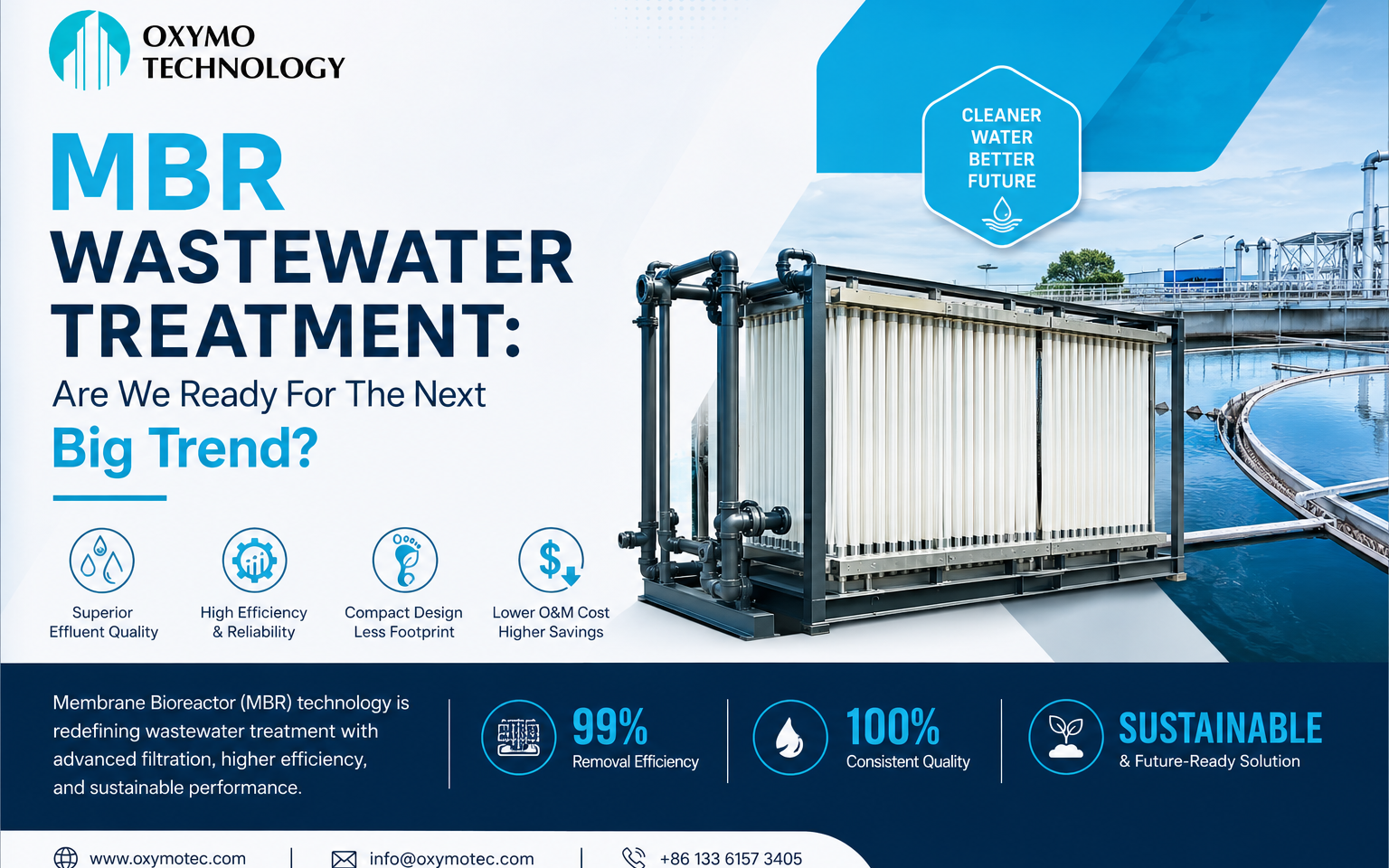
MBR stands for Membrane Bioreactor. MBR combines two well-established technologies: biological treatment (such as activated sludge) and membrane filtration (microfiltration or ultrafiltration). A secondary clarifier in traditional wastewater treatment separates the treated water and biomass. In an MBR, however, separation occurs via hollow fiber or flat sheet membranes placed directly in the bioreactor tank. The result? Cleaner effluent. Faster processing and a much smaller plant footprint. In simple terms: MBR wastewater treatment eliminates two or three steps required by conventional treatment methods while delivering superior results.
Why Is MBR Technology Gaining Ground So Rapidly?
The global MBR market size was estimated at more than USD 3.5 billion in 2023 and will expand at a more than 9% compound annual growth rate (CAGR) from 2023 to 2030. This is not a coincidence!
This quick uptake is due to a few factors:
- Strict norms for water quality established by the CPCB and the state boards in India.
- Water recycling systems are becoming more popular as water scarcity is becoming a growing concern in the business world.
- Increased demands for Zero Liquid Discharge (ZLD) requirements.
- Steady increase in reusing of industrial wastewater in industrial processes.
- Compact sewage treatment systems are needed for the development of smart cities.
In short, industries aren’t just looking to treat their wastewater. They wish to use it more than once. And MBR does that – and it does it extremely well with consistently high effluent quality.
Key Benefits of MBR Wastewater Treatment
The following are the reasons more and more companies are turning their back on conventional treatment methods and going for MBRs:
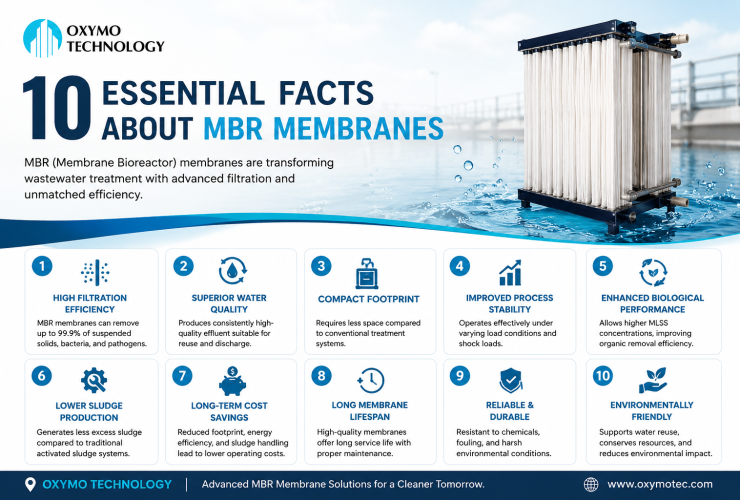
- Superior Effluent Quality
MBR systems can generate effluent with very low levels of suspended solids, BOD, COD, and pathogens. The quality of the output is so good that often it can be directly reused in cooling towers, landscaping, or even for process water applications.
- Compact System Design
Elimination of secondary clarifiers and sludge thickeners in MBR makes the overall footprint of the plant up to 30-50% smaller than conventional ones. For industries that are facing space shortages, this is really a major advantage.
- Automated and Low-Maintenance Operations
Modern MBRs feature automated controls as well as remote monitoring and self-cleaning membrane cycles. This reduces dependence on skilled operators and lowers daily operational overhead.
- Better Sludge Management
Because MBR systems run at higher Mixed Liquor Suspended Solids (MLSS) concentrations, they produce less sludge. Lower sludge production leads to decreased disposal costs.
- Ideal for Water Recycling
Water treated at an MBR plant is pure enough to feed into a reverse osmosis (RO) system for complete water recovery, thereby making it an essential step in achieving zero liquid discharge (ZLD) or near-ZLD goals.
Real-World Applications of MBR Systems
MBRs (Membrane Bioreactors) are extensively employed by industries today to effectively treat wastewater and generate good-quality treated water that can be reused. Textiles and dyeing industries utilise MBR to reduce colour and eliminate organic pollutants, while the pharmaceutical, food and beverage, and biotech industries use it to adhere to environmental regulations and treat high-strength wastewater. They are also installed in hospitals and healthcare centers and in municipal wastewater plants where robust pathogen removal and stable treated water quality are necessary. Used by housing townships, in smart city applications, and in hotels and commercial buildings, they offer compact designs and make water reuse possible for landscape irrigation and toilet flushing. Designed as per user requirements, MBR plants treat water that meets all standards and guidelines.
Challenges to Keep in Mind
There isn’t a perfect technology. Before investing in MBR wastewater treatment, businesses should be aware of a few challenges:
- It has a higher initial capital cost than conventional systems.
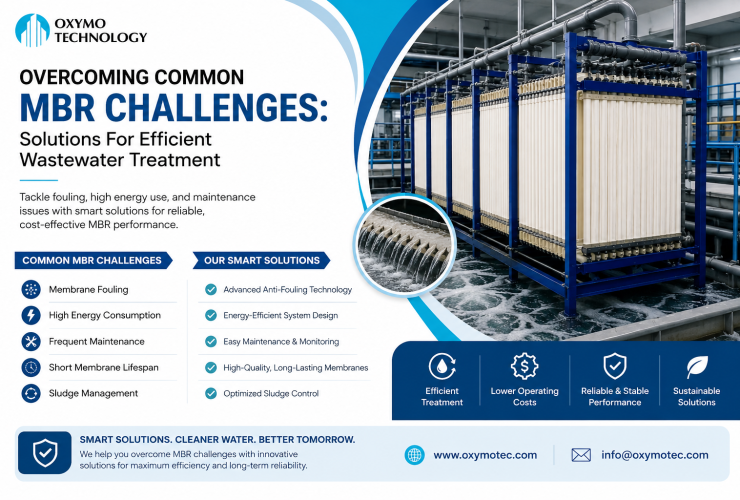
- Membrane fouling: requires periodic chemical cleaning and eventual membrane replacement.
- Higher energy consumption due to membrane aeration.
- Skilled engineering support is required during system design and commissioning.
Fortunately, most of these challenges can be addressed effectively with the right technology partner by sizing the system appropriately, selecting the membrane, and following the proper operating procedures.
Emerging Trends in MBR Technology for 2026 and Beyond
Industries are constantly on the lookout for more efficient and sustainable solutions to wastewater treatment, and as a result, MBR technology is evolving at a fast pace. In fact, current systems are being developed to integrate MBR with technologies such as MBBR and anaerobic MBR to not only enhance treatment performance but also to lower the consumption of energy. Besides, novel low-fouling membrane materials together with improved aeration designs are enabling wastewater treatment plants to reduce operating costs and significantly improve efficiency. Another significant trend is an increased implementation of smart and integrated treatment systems. A large number of plants are combining MBR with RO and NF technologies to demonstrate the feasibility of Zero Liquid Discharge (ZLD) and, at the same time, achieve the maximum water recovery. IoT-enabled monitoring, sensors that provide data in real-time, and remote diagnostics are also becoming standard features. Portable and compact MBR modules are facilitating the decentralization of wastewater treatment, making it a more viable option for residential complexes, hospitals, and commercial establishments, in particular in the rapidly expanding urban areas.
Conclusion
MBR wastewater treatment is more than just a technology upgrade. This is a strategic investment to ensure water security, to meet regulations, and to improve operational efficiency. As water stress grows and environmental laws become more stringent, companies that early on implement advanced treatment processes like MBR will gain a significant advantage. If you are considering installing a new effluent treatment plant, upgrading an existing plant, or considering options for complying with the ZLD requirement, give MBR a second glance. The benefits have been demonstrated, the technology is robust, and the business case continues to get better. Looking for an MBR wastewater treatment system for your facility? Get in touch with OXYMO Technologies today. Our team of water treatment professionals will evaluate your requirements. Come up with the appropriate MBR system design and ensure you are supported throughout the concept stage to the commissioning phase.
FAQs
What is the difference between MBR and the conventional activated sludge process?
MBR replaces the secondary clarifier and delivers superior effluent quality in less space. Traditional technologies use more land and provide lower-quality effluent.
Is MBR wastewater treatment suitable for small-sized plants?
Yes. Small-capacity modular and compact MBR systems are available, suitable for hospitals, housing societies, hotels, and small industrial units.
How often do MBR membranes need to be replaced?
Properly maintained and chemically cleaned, MBR membranes can last up to 7–10 years. Membrane life depends on feed water quality and operating conditions.
Can MBR treated water be reused for industrial processes?
Absolutely. MBR effluent quality is suitable for direct reuse in cooling towers, landscaping, toilet flushing, and RO feed for ZLD targets.