
Zero Liquid Discharge (ZLD) with Membrane Technology – Is It Achievable?
Imagine a place where no treated wastewater is discharged as liquid waste. All the water is recovered, recycled, and reused. There is no discharge, no penalties, no environmental liability; it is just a dry solid. That’s what Zero Liquid Discharge promises. For a long time, most industries considered it to be a promise, something that is appealing on paper but impossible to achieve in reality. That is where membrane technology comes into play. But now is not the time to ask whether ZLD is possible, but how smartly the approach is taken towards achieving ZLD.
What ZLD Actually Demands from Your Treatment System
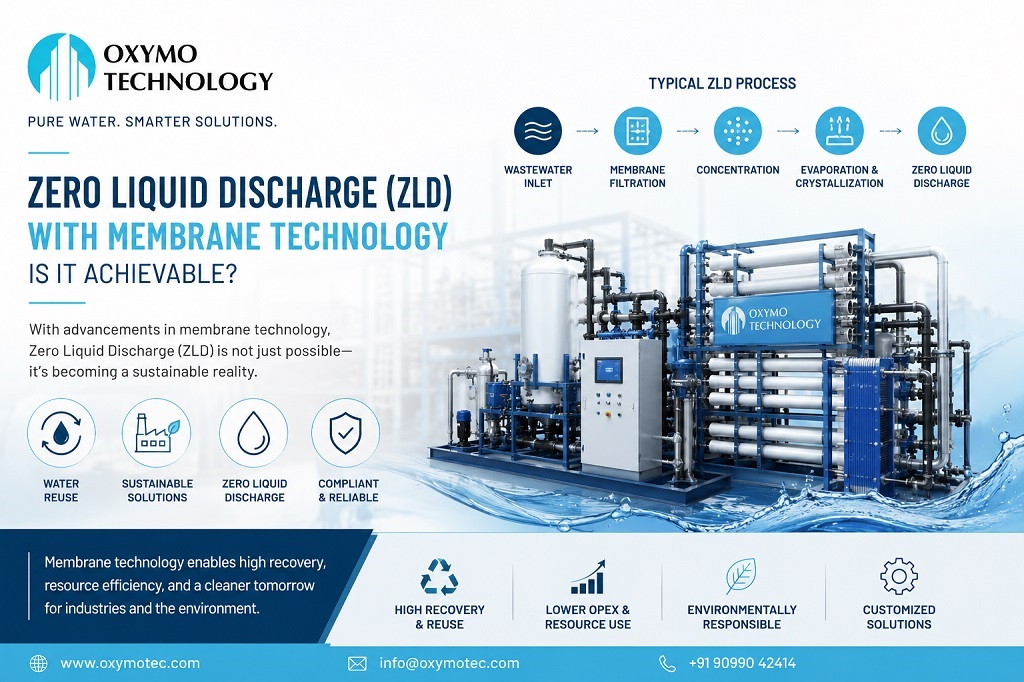
Zero Liquid Discharge is not an individual piece of equipment but a treatment philosophy that strives to achieve the highest possible water recovery (usually > 95%), concentrating the remaining brine into recoverable solids. It takes a series of processes to reach there, and these processes have to play well together. Membrane technology is in the center of this series since it performs the major work before getting to the more energy-consuming thermal stages. Without it, ZLD becomes extraordinarily expensive to operate.
This mindset change is reflected in the global ZLD market. In 2024, the value of those industries was more than USD 7 billion, with spending on discharge elimination predicted to rise at a steady CAGR until 2033, as regulations become stricter and the price of taking in freshwater increases.
How Membrane Technology Builds the Path to ZLD
A well-designed ZLD system incorporates membrane technology in a layered process to progressively eliminate the amount of liquid volume that is later subjected to thermal processes. This is where the actual savings in energy and costs occur. Reverse osmosis (RO) has been proven to reduce energy use by 58–75% compared to evaporation systems alone before thermal treatment.
The standard membrane sequence in a ZLD configuration looks like this:
- The ultrafiltration (UF) process captures suspended solids, colloidal material and biological load, preventing upstream membranes from fouling early.
- Nanofiltration (NF) selectively removes divalent ions (Ca + Mg), which helps to minimize the risk of scaling and allows for higher recovery in the next stage.
- Reverse Osmosis (RO) removes a large percentage of the treated stream through concentration, with the majority of the water being usable before it reaches the thermal unit.
- New technologies such as membrane distillation (MD) and Forward Osmosis (FO) are being developed for high-salinity concentrates where conventional RO is at its pressure limits.
The Challenges That Still Need Honest Answers
Membrane technology has increased the feasibility of ZLD, but there are still a few challenges to its operation.
Membrane Fouling and Scaling: Over time, wastewater containing high concentrations of organic matter or salts can foul the membranes. If not maintained properly, the treatment efficiency can be reduced. To keep the operation stable, regular cleaning schedules and pretreatment systems are required.
Initial Capital Investment: Large-scale infrastructural investment is necessary for the ZLD system, particularly for industries having higher treatment capacity. Many businesses see membrane technology as a long-term investment today as water recovery lowers the cost of freshwater procurement and ensures regulatory compliance.
Complex Wastewater Composition: Some industrial wastewater effluents have very variable contaminants and thus need multi-stage treatments. In these situations, membrane technology is most effective when used in conjunction with biological treatment and advanced evaporation systems.
Conclusion
Membrane technology is highly effective in pre-concentrating wastewater before being treated thermally, thus drastically reducing the amount of wastewater that a costly evaporator needs to treat, which leads to significant energy savings and reduced total CAPEX.
ZLD is no longer just for the big companies with unlimited budgets. It’s an achievable operational goal that you can measure, with the right membrane technology design and when the system is based on your specific wastewater profile.
Oxymo Technology manufactures ZLD-ready membrane systems, from ultrafiltration pretreatment to high-recovery RO configurations tailored for industrial facilities that need to meet discharge standards today, not someday.
FAQs
Can all industries reach zero liquid discharge?
Technically, ZLD is possible in most industries, but the feasibility of implementing ZLD will be influenced by the characteristics of the wastewater, its size and quantity, and applicable regulations.
What role does RO play in a ZLD system?
RO reduces the energy costs and size of thermal equipment used by concentrating the wastewater and recovering most of the reusable water before it reaches the thermal evaporators.
What are the main operation problems in the ZLD membrane system?
The major problems are membrane fouling and scaling due to high salinity and ion concentration in the streams. How does membrane technology reduce ZLD operating costs?